
By
Eleni Kytoudi
At a time when longevity and well-being are increasingly shaping how we define modern luxury, Cristina Stribacu, founder of LIÁ Olive Oil, offers a perspective grounded in the Mediterranean way of life. Drawing from her work at the intersection of land, taste, and tradition, she explores how daily rituals—such as the use of olive oil—connect to broader ideas of heritage, place, and intentional living.
Below, she reflects on how longevity is not pursued directly, but emerges through the environments we inhabit and the rhythms we sustain.
Longevity as a Lifestyle Asset
The Mediterranean diet is often discussed in terms of nutrients and health outcomes, yet its deeper value lies in the way it structures everyday life. Longevity, in this context, is not something pursued directly, but something that emerges through repetition, through habits that are sustained over time.
Longevity, in the Mediterranean, is rarely engineered; it is accumulated.
In her work with LIÁ, olive oil is approached not simply as an ingredient, but as a daily constant. It is present across the day, used both raw and in cooking, not as an addition, but as a foundation.
A well-produced extra virgin olive oil is not merely fat; it is a biologically active substance. Its polyphenols act as protective compounds, its monounsaturated structure offers remarkable stability under heat, and its freshness determines whether it functions as a living food or a depleted one. Contrary to persistent misconceptions, extra virgin olive oil is not fragile. When properly produced, it remains one of the most stable fats for everyday cooking.
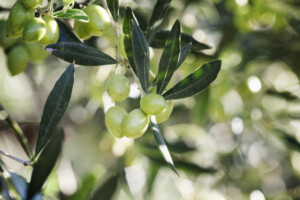
In regions often referenced as “Blue Zones”, this is not theory, but practice. Dishes such as ladera, where vegetables are slow-cooked with extra virgin olive oil, form a central part of the table. These preparations allow oil and plant-based ingredients to interact over time, enhancing both flavor and the absorption of fat-soluble nutrients.
What emerges is not a single ingredient, but a system: plant-forward meals, olive oil as the primary fat, time allocated to cooking, and meals shared without urgency.
Equally important, however, is place. Longevity is shaped not only by what we eat, but by where we live, even temporarily. To spend time in landscapes such as Messinia or the Aegean islands, to move through them, to experience their light and proximity to the sea, is to enter a rhythm that supports well-being in its broadest sense.
And perhaps this is where longevity truly resides—not in what is added, but in what is repeated.
“Longevity, in the Mediterranean, is rarely engineered; it is accumulated.”
Provenance & Emotional Value
In a market where products are increasingly standardized, provenance has become a way of restoring meaning. Traceability explains a product; provenance gives it meaning.
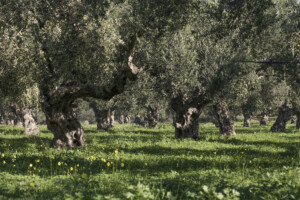
At LIÁ, the story behind the oil is inseparable from the oil itself. It reflects a specific place, the age of the trees, and the continuity of cultivation over generations. This is not abstract; it is perceptible in the oil’s structure, its intensity, its balance.
Working closely with the land makes it clear that oils produced from smaller groves, where harvesting is selective and milling immediate, tend to preserve both their phenolic richness and aromatic complexity. This is where terroir becomes essential.
Olive oil, much like wine, carries the imprint of its environment in ways that are both measurable and sensory.
An olive oil without origin is simply a fat. With origin, it becomes a place.
To know where an oil comes from, down to the grove, changes the nature of the experience. It creates not just appreciation, but connection.
“An olive oil without origin is simply a fat. With origin, it becomes a place.”
Heritage Meets Modern Luxury
Greek olive cultivation is inherently rooted in continuity. The same trees, often centuries old, remain productive through practices that have evolved slowly over time.
With LIÁ, the intention has always been to express this heritage in a way that feels relevant today, without altering its essence. Today, luxury is increasingly defined not by excess, but by clarity, restraint, and access—to authenticity, to time, and to environments that support a certain quality of living.
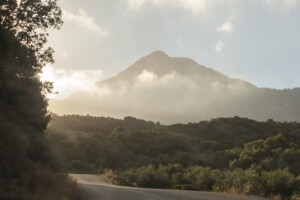
In this sense, the Mediterranean landscape itself becomes part of the experience. The Greek landscape offers a convergence of elements that are increasingly rare: agricultural integrity, natural beauty, and a pace of life that allows for both presence and restoration. To spend time there, whether seasonally or repeatedly, is to engage with a different model of well-being.
Within this framework, olive oil becomes both product and expression. It reflects the land, but also the values associated with it: precision, care, and quiet confidence.
Taste as Cultural Capital
Taste is often perceived as subjective, yet it is, to a large extent, developed.
To appreciate a high-quality olive oil requires an ability to perceive structure: the interplay between fruitiness, bitterness, and pungency, the length and evolution of its finish. These attributes are directly linked to the oil’s composition, particularly its phenolic content and freshness.
Taste is not preference; it is trained perception.
Through working with olive oil, it becomes clear how much perception can evolve. This cultivation rarely remains limited to food; it informs how one experiences spaces, materials, and environments.
In this sense, taste becomes a form of cultural capital—not as a marker of status, but as a reflection of awareness.
What we learn to taste, we learn to value.

Land, Legacy & Investment Thinking
Her journey began with inherited olive trees—something that, in Greece, is often taken for granted. Over time, however, it became clear that land carries a different significance when viewed through a broader lens. It is not only a resource, but a form of continuity.
Land is one of the few assets that does not accelerate; it deepens.
In such regions, this relationship extends beyond agriculture. The land offers a framework for living, one that integrates food, environment, and time.
This is where the idea of investment shifts. Land becomes not only heritage, but a form of lifestyle investment—one that offers access to a different quality of life: proximity to nature, connection to food, and immersion in a slower, more intentional rhythm.
To invest in land is, increasingly, to invest in a different relationship with time.
As interest in longevity continues to grow, such environments become increasingly relevant—not because they promise longevity, but because they create the conditions in which it can naturally unfold.
Longevity, ultimately, may not be something we pursue directly. It may be something that takes shape quietly, through the lives we build, the environments we inhabit, and the rhythms we choose to sustain.
In such a life, olive oil is never incidental. It is part of the structure itself.
“Land is one of the few assets that does not accelerate; it deepens.”
About the Owner
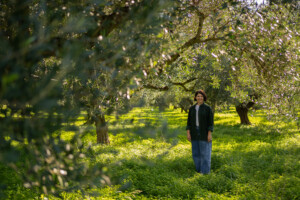
Cristina Stribacu is an international olive oil taster and founder of LIÁ Olive Oil, working at the intersection of Mediterranean culture, taste, and longevity. Through curated olive oil tastings in a luxury context, she explores how land, food, and daily rituals shape a more intentional way of living.
At Greece Sotheby’s International Realty, we believe that luxury is ultimately defined by the quality of life a place can offer—something the Mediterranean continues to embody in its purest form.