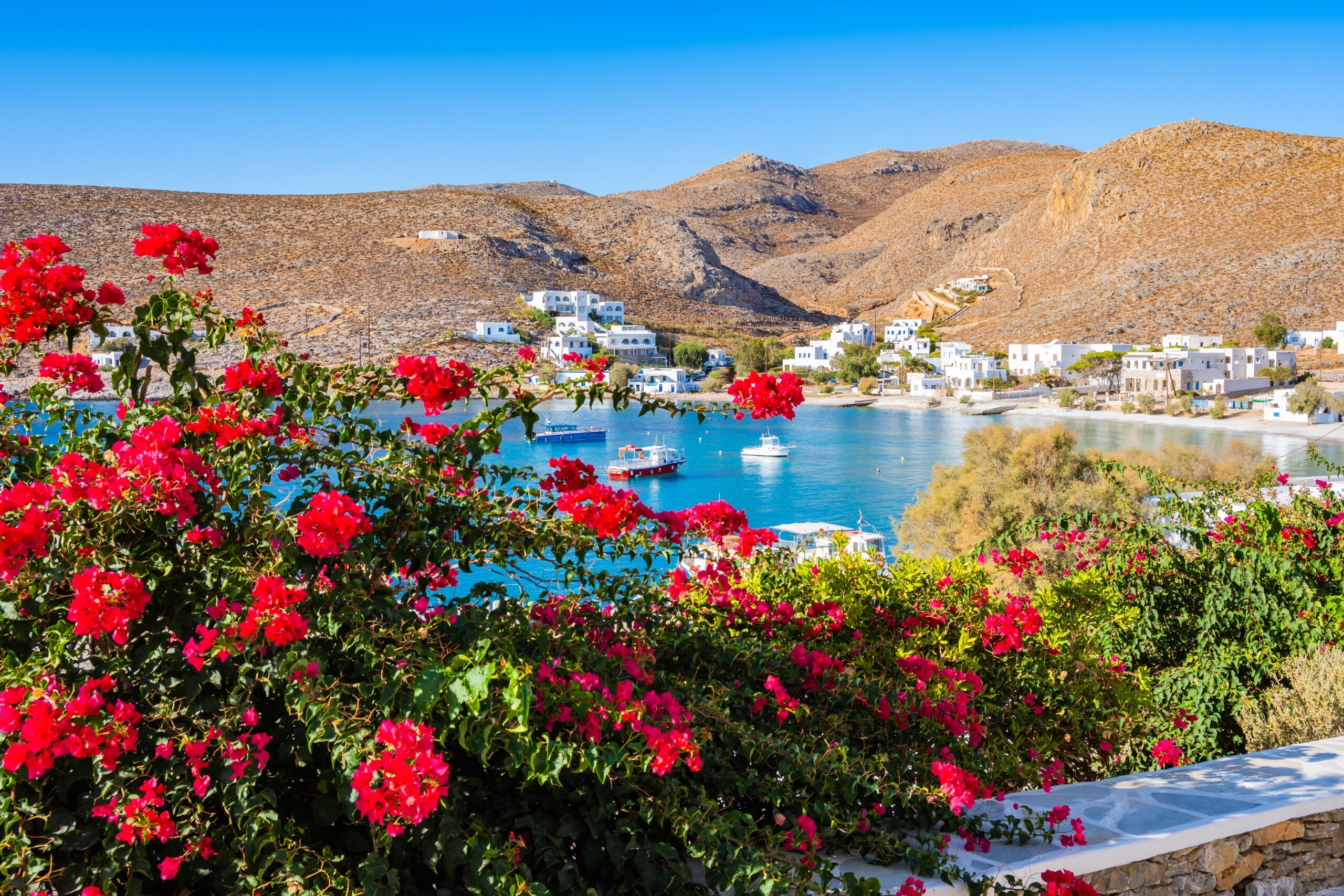
Year after year, our clients reach out to us from different cities and different lives, each with their own story. Surprisingly, those stories seem to lead to the same place: a search for meaning, a curiosity about culture, a wish to live closer to what matters. Together, they form a new kind of buyer, and I call them the Romantic Affluent.
They seek what many of the world’s established luxury enclaves have lost: authentic, unpretentious living, far from the social media frenzy and the noise of conspicuous luxury. They want to reconnect with themselves, with the people they love, with nature, and with the beauty of a place and its people.
Their search begins with a way of life; the destination follows.
And where is that life more compelling than on the Greek islands and across much of the Greek mainland, where the Greece of the 1970s still thrives in countless unspoiled corners?
In these places, children run barefoot through village lanes, and life moves at a human pace. Visitors and residents share a Greek coffee with locals under the plane tree of the kafeneio, and families gather memories in a setting that feels like a page from another time.
For the Romantic Affluent, Greece offers a living postcard of a world that has vanished elsewhere, and an invitation to step inside it.
The Romantic Affluent finds fulfilment away from the spotlight. They seek places with soul, where the sea lies a few steps away, the stories run centuries deep, life is unhurried, and beauty endures. Greece answers this longing with open arms.
Places like these are rare, and those who find them rarely let go.
That devotion leaves its mark on the market. Despite its size and tourist appeal, Greece accounts for just 2.8% of luxury inventory across the Mediterranean, yet its median price approaches €2 million, among the highest in the region. The offering explains the premium: low-density, connected to the sea, architecturally refined and evocative. Greece’s luxury market is small in volume and high in value: curation in its purest form.
Alongside scarcity and selectivity, Greece offers a coastal identity lived day by day: morning swims, long lunches by the water, evening walks along the harbour. With 16,400 kilometres of coastline, Greece has more premium seafront than Italy, France and Spain combined. Much of it remains in its natural state, preserving the beauty and privacy the Romantic Affluent treats as essential.
Beyond the physical setting lies an emotional ecosystem. In Greece, beauty is felt as much as seen. It lives in the rhythm of the villages, the conversation around a shared table, the golden light of late afternoon and the generosity of people who welcome a stranger as family. For the Romantic Affluent, this is where life regains its meaning. I have spent thirty years introducing people to this feeling, and it still stirs me every time.
One island shows how this quiet demand is reshaping Greece through value.
Tinos, once a destination of religious pilgrimage, has become one of Greece’s most compelling second-home markets, with its character intact. Its villages keep their original form, its artisans still carve marble by hand, its coastline stays pristine.
What changed? A new wave of Romantic Affluent buyers fell for exactly what Tinos had preserved, and the island’s standing grew with their affection. Its architectural movement, led by homes such as the Lap Pool House, now sets a national design benchmark. New wineries and intimate hotels add depth while density stays low.
Tinos proves that elevated demand and respectful growth can coexist, and that lasting value grows from care for a place.
The same desire for meaningful living is alive in Athens.
Even in a capital, the Romantic Affluent finds a slower pace of life:
ancient beauty woven into the everyday, neighbourhoods humming with warmth and a food culture rooted in simplicity and origin.
Athens breathes history. From the Acropolis glowing at dusk to the bustle of its street markets, it blends grandeur with intimacy. Its people are welcoming and open-hearted. One of its greatest gifts, a long, sunlit coastline, is now being rediscovered.
Athens Riviera stretches along one of Europe’s longest urban waterfronts. Once overlooked, it is now being reshaped with vision, from the Ellinikon coastal park to new residential enclaves. At dusk, its coastal road of almost 40 kilometres becomes a sunset boulevard: a dreamy setting for couples and a paradise for families.
Its waters make it the ultimate city playground for sailing, whether for leisure or for competition at the highest level. A string of marinas, from Zea and Flisvos to Alimos and Vouliagmeni, brings the Saronic islands within a weekend’s reach and opens the Cyclades to island hopping. The city is turning to face the sea again, embracing it as a way to elevate everyday living.
Greece is becoming a place to live well as much as to stay well, to slow down and reconnect. The Romantic Affluent is here to stay, and they are the future of global luxury. Greece feels tailor-made for its values. This is an exciting moment, and it calls for care.
Greece must grow selectively and protect what makes it rare.
For this new demographic, vision outweighs volume.
If Greece leads with restraint, elegance and emotional resonance, it will define the new luxury era. I believe it is ready.